
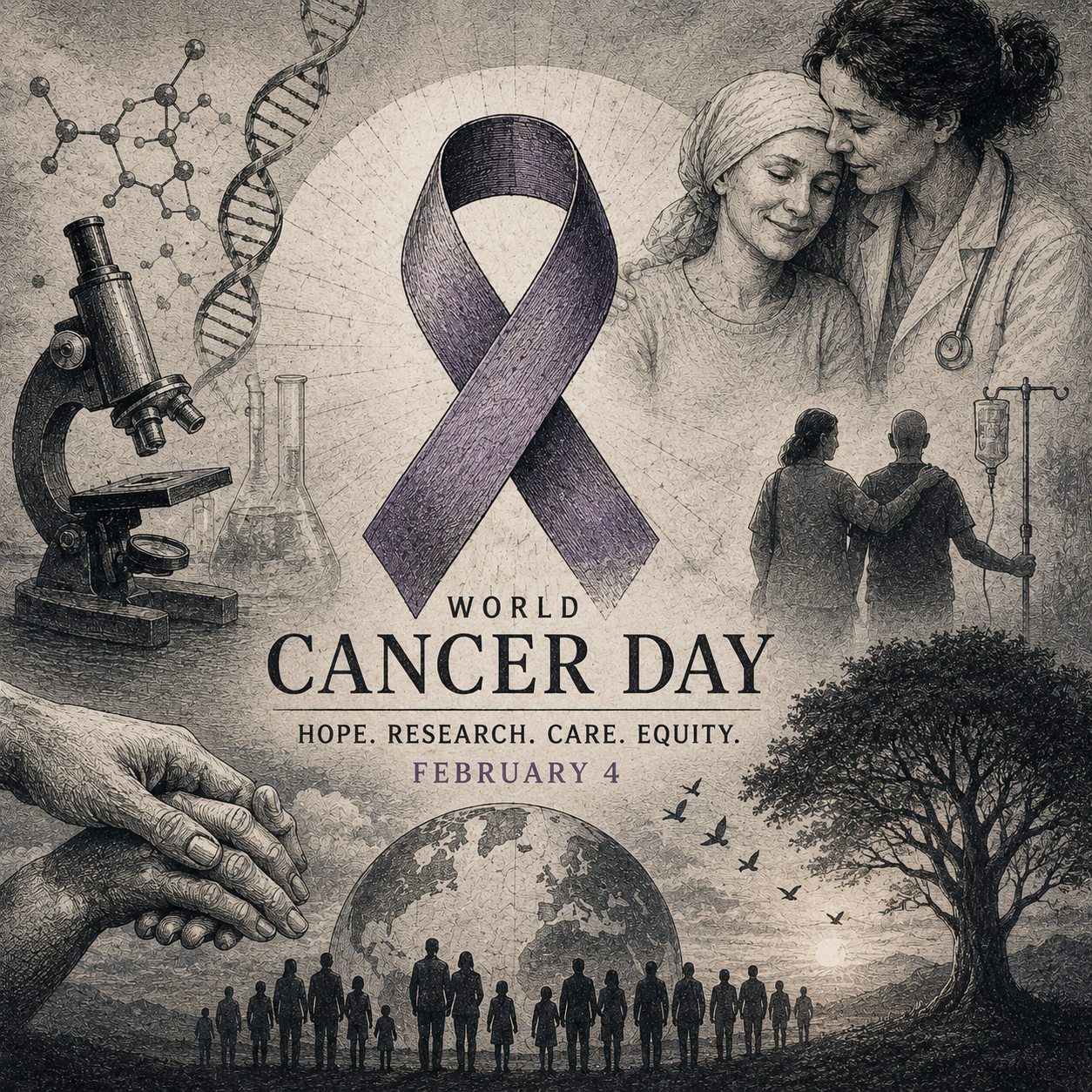
February 4 is World Cancer Day. It is a day of compassion for those affected by cancer in all its shapes. It is a day of resolve to continue working toward new cancer treatments, earlier cancer detection, and better cancer prevention. It is a day of remembrance for the untold millions cancer has taken. It’s a day of admiration and respect for the caregivers and loved ones too often overlooked. But most of all, it is a day of optimism and celebration.
In recent decades, the cancer treatment landscape has shifted dramatically. Survival rates for many types of cancer have skyrocketed, especially with the advent of more targeted and personalized treatments offered by incredible new approaches, like CAR T-cell therapy and radioligand therapy. And the speed of research and innovation only continues to accelerate, with novel technologies in the trial pipeline that are indistinguishable from science fiction[1]. Not to mention that widespread HPV vaccination has made the eradication of cervical cancer a genuine possibility.
Meanwhile, improved techniques for early cancer detection—plus awareness and education about the importance of screening—are resulting in many types of cancers being caught much earlier, leading to far better outcomes from traditional treatments, like chemotherapy, radiation, and surgery, which are themselves being steadily improved and iterated upon. Many cancers that once carried high mortality rates are today, being viewed as chronic illnesses.
No one ever wants to hear they have cancer, but there has never been a more hopeful time to receive that diagnosis than today. More and more patients every year are having conversations with an oncologist that begin with: “If you have to have cancer, this is a good one to have.”
And yet, there are still far too many bad ones. For every inspiring story of a patient’s complete recovery aided by innovative cancer therapies, there remains another patient being told there is still no practical treatment for their cancer. Or worse, being told that a treatment exists, but it’s not accessible to them. Access to cancer care continues to be heartbreakingly unequal, not only between countries, but often between regions or circumstances even in the most developed nations.
There is no universally accessible “cure for cancer” on the horizon. Even the most miraculous modern treatments are very narrow in the types of cancer they treat. The advent of genetic testing has allowed patients and doctors unprecedented insight into the specifics of each individual cancer, directly enabling many of these new targeted therapies. But the flip-side of that same coin is that the number of “types of cancer” continues to grow every year.
On this global day of awareness for all cancers, perhaps the most important thing to remember is that not all cancers are alike, and cancer patients even less so. The story of cancer research is an increasingly optimistic one. But each individual cancer story may be one of pain or triumph, hope or frustration, loss or transformation, or—perhaps most often—all of those at once and more. Until the bright promise of our most advanced cancer care is applicable—and accessible—to each and every one of these stories, we must put in the work, and continue to fight. But, we shouldn’t forget to celebrate our wins along the way.
[1] For just one example, consider the new “magnetodrone” technology developed in Montreal, in which cancer-killing bacteria are directed to tumours from outside the body using computer-controlled magnetic fields. Animal trials were extremely promising, and human trials are beginning, focusing on six cancers: pancreatic, prostate, head and neck, rectal, vulval, and breast cancers.